Pangolin Facts That Amaze!

Amina Hassan
| 13-08-2026
 · Animal Team
Hello Readers! Pangolins may look like creatures from another era, but they are very much alive today—and far more fascinating than their unusual appearance suggests. These shy mammals have scales instead of fur, remarkably long tongues, powerful claws, and a surprisingly clever way of escaping danger.
Found across parts of Africa and Asia, pangolins have developed a collection of adaptations that make them unlike almost any other mammal. From their unusual diet to their extraordinary defense strategy, each detail tells a story about how they survive in the wild.
1. Pangolins Are the Only Mammals Covered in Scales
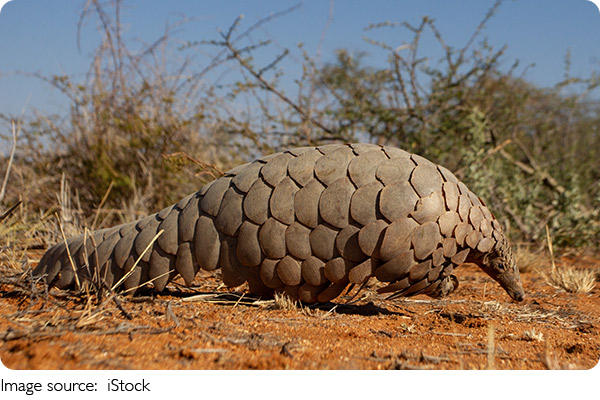
The most recognizable feature of a pangolin is its scales, and there is a good reason they attract so much attention. Pangolins are the only mammals known to have large, overlapping scales covering much of their bodies. The scales are made primarily of keratin, a structural protein also found in human hair and fingernails. They grow from the skin and overlap in rows, allowing the animal to move without carrying a completely rigid covering.
Their scales are especially important for defense. When a pangolin senses danger, it can curl its body into a tight ball, protecting its head, belly, and limbs beneath the scaled surface. This unusual defense makes the pangolin one of the most distinctive mammals on Earth.
2. Their Tongues Can Be Remarkably Long
Pangolins have another extraordinary adaptation hidden inside their mouths: a long, narrow tongue designed for catching ants and termites. Depending on the species, the tongue can extend surprisingly far beyond the mouth. It is supported by specialized structures within the body and coated with sticky saliva that helps insects adhere to it.
A pangolin does not need to chew its food in the same way many mammals do. Instead, it uses its tongue to collect large numbers of ants and termites from nests and underground colonies. This feeding method works perfectly with another feature—the animal's powerful claws. Pangolins can tear into insect nests and then quickly use their tongues to collect their meal. Their entire feeding system is therefore built around one very specific food source.
3. They Have Powerful Claws for Digging
Pangolins may move slowly, but their front limbs can be surprisingly powerful. Their strong, curved claws help them break into termite mounds, ant nests, and soil while searching for food. The claws are also useful for creating shelters. Some pangolin species dig burrows where they rest during the day or seek protection from harsh environmental conditions. Digging requires considerable strength, especially when the ground is compact or dry. Pangolins have adapted their limbs to handle this demanding work.
Their claws also demonstrate how closely different parts of the animal's body are connected. The scales protect them, the claws open insect nests, and the long tongue collects the insects inside.
4. Pangolins Don't Have Teeth
One of the strangest facts about pangolins is that they are toothless. Since their diet consists mainly of ants and termites, they have no need for conventional teeth designed to crush large pieces of food. Instead, they rely on their long tongues and specialized digestive system. They also have powerful stomach muscles and may swallow small stones or grit, which can help process food after it has been swallowed.
Their lack of teeth is not a disadvantage. It is another example of how their body has evolved around their highly specialized diet. Rather than being general-purpose feeders, pangolins are remarkably focused insect hunters.
5. Their Defense Strategy Is Almost Unforgettable
When a predator approaches, a pangolin has a surprisingly dramatic response. Instead of running directly into a fight, it can curl itself into a compact ball. The head moves inward, the limbs are tucked beneath the body, and the tail can help close the remaining gaps. The overlapping scales then form a protective outer layer. Some pangolins can also use their strong muscles to hold this curled position tightly. A predator may have difficulty getting through the scales or forcing the animal open.
This behavior is especially impressive because it works with the pangolin's anatomy rather than against it. The animal does not need to be aggressive to defend itself. Its body provides the protection.
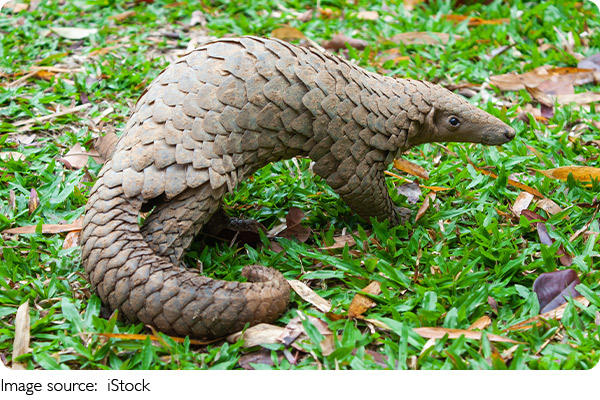
Pangolins may appear quiet and simple at first, but their biology tells a very different story. Every major feature seems connected to survival, making pangolins a remarkable example of adaptation in mammals. Sadly, their unusual biology has also made them vulnerable to human exploitation, which is why protecting wild pangolin populations is so important.