Clean Your Jewelry Right

Sofia Alvarez
| 14-05-2026
 · Fashion Team
Gold and silver sit next to each other in most jewelry boxes, but they behave completely differently when it comes to maintenance.
Gold is steady — it doesn't tarnish, but it does accumulate a film of body oils, lotions, and environmental residue that gradually dulls its surface.
Silver is more reactive — it darkens when exposed to air, humidity, and skin chemistry, sometimes noticeably within weeks. Knowing which metal you're working with changes everything about how you clean it. The foundation of jewelry care at home isn't a special technique. It's restraint, and understanding what your specific piece actually needs.
Simple Gold Cleaning
For gold — whether yellow, white, or rose — the most reliable method is also the simplest. Fill a small bowl with lukewarm water, add a single drop of gentle unscented dish soap, and let the piece soak for five to ten minutes. That soaking time does most of the work, loosening the oil and product buildup that accumulates with daily wear. After soaking, use a soft-bristled brush — an infant's toothbrush is ideal — to work gently into the small crevices. Think of it as dusting a delicate frame, not scrubbing. Rinse thoroughly with warm water, pat dry with a soft cloth, and let the piece air dry completely before storing.
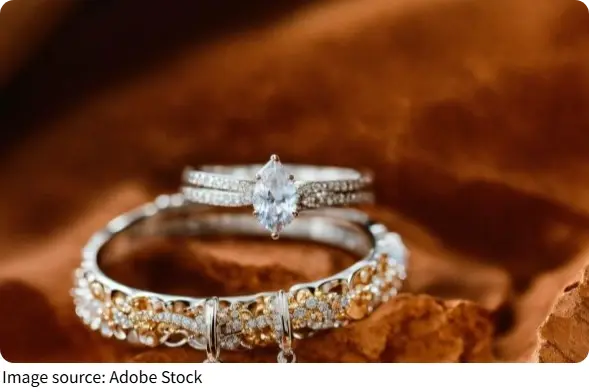
What to Avoid With Gold
Bleach and chlorine are the most damaging substances for gold alloys — they degrade the metal's structure gradually and the damage isn't immediately visible. Remove gold jewelry before swimming in chlorinated water or using household cleaning products. Ammonia occasionally appears in cleaning recommendations for gold, but the list of exceptions is long enough — soft gemstones, treated diamonds, glued settings — that it's safer to skip it for home use. The soap and water method handles routine cleaning just as effectively without the risk.
Silver Needs a Different Approach
Silver tarnishes even when cared for well. It's simply the metal's nature. For light tarnish, the same warm-water and mild-soap soak works as a starting point. For more significant darkening, a silver polishing cloth is the safest home option — it contains polishing compounds formulated specifically for silver, it's far gentler than DIY paste recipes, and a few light strokes in the direction of the metal grain lift tarnish effectively. The aluminum foil method is another reliable option for solid sterling silver: line a bowl with foil, add hot water and baking soda, and submerge the silver so it contacts the foil. The electrochemical reaction lifts tarnish without any physical scrubbing. This is for solid silver only — never use it on plated pieces or anything with soft or porous gemstones.
Gemstones Change the Rules
Once a piece has gemstones, the cleaning approach narrows considerably. Hard stones like diamonds, sapphires, and rubies generally tolerate the mild soap-and-water soak. Soft or porous stones — opals, turquoise, emeralds, pearls — should never be soaked. A barely damp cloth is the maximum for those. Glued settings are another category to keep completely dry. Heat is always off the table: hairdryers, ultrasonic cleaners at high settings, and boiling water all carry real risk of loosening settings or cracking heat-sensitive stones. When in doubt about a specific piece, the safest option is a professional cleaning — especially for anything valuable or worn daily.
Proper jewelry care is about understanding the material and using the right method for each type. With gentle cleaning, simple precautions, and the right tools, gold, silver, and gemstone pieces can maintain their shine and quality for years. When in doubt, choosing a safer method or professional cleaning helps protect valuable jewelry from avoidable damage.