Virtual Immersion

Kwame Johnson
| 13-05-2026
 · Science Team
A room fades. A headset adjusts. In a matter of seconds, the boundary between physical space and the digital environment dissolves.
What was once observed on a screen now surrounds the body entirely. VR is not simply a new display—it is a fundamental shift in how reality is perceived.
From Observation to Presence
Traditional media keeps a clear distance between viewer and content. VR removes that distance by placing the user inside the environment itself.
Instead of looking at a scene, the user exists within it:
- Turning the head changes the direction of vision.
- Moving the body shifts perspective naturally.
- Sound reacts to spatial position.
This creates a sense of presence, where perception feels immediate rather than mediated.
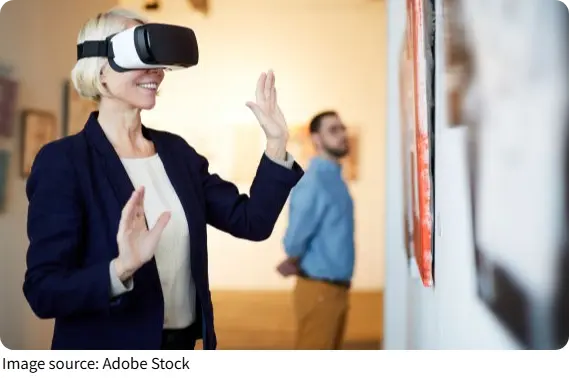
The Role of Sensory Synchronization
VR works because multiple senses are aligned in real time. Vision, sound, and motion respond together, forming a unified experience:
1. Visual alignment — images adjust instantly with head movement.
2. Spatial audio — direction-based sound enhances realism.
3. Motion tracking — physical actions translate into digital space.
When these systems work together, the brain interprets the virtual environment as physically meaningful.
Redefining Interaction
In VR, interaction is no longer limited to buttons or screens. It becomes physical and intuitive:
- Reaching out to grab virtual objects.
- Walking through simulated environments.
- Gesturing to trigger responses.
This form of interaction reduces abstraction and increases immediacy. Actions feel closer to natural behavior rather than controlled input.
Changing Perception of Space
One of the most striking effects of VR is how it reshapes spatial awareness. Scale becomes flexible, distance is perceived differently, and environments can expand infinitely or compress into small, detailed worlds.
A familiar concept—space—becomes designable, allowing creators to build environments that challenge real-world limitations.
Emotional Engagement and Immersion
Because VR surrounds the user entirely, emotional responses often feel stronger. Environments are not observed passively but experienced directly.
This intensity can:
- Increase focus during tasks.
- Enhance memory of experiences.
- Strengthen emotional connection to environments.
However, it also requires balance, as prolonged immersion can feel mentally demanding.
Applications Beyond Entertainment
VR is expanding far beyond gaming or entertainment. Its ability to simulate environments makes it useful in multiple fields:
1. Training simulations — practicing complex tasks safely.
2. Educational environments — visualizing abstract concepts.
3. Design and planning — exploring spaces before they are built.
These applications rely on VR's core strength: experiential understanding rather than theoretical observation.
Shifting the Role of the Viewer
In traditional media, the viewer remains outside the content. In VR, the viewer becomes part of it. This shift changes how stories are told, how environments are understood, and how experiences are remembered.
The distinction between “watching” and “being there” becomes increasingly thin.
A New Layer of Human Experience
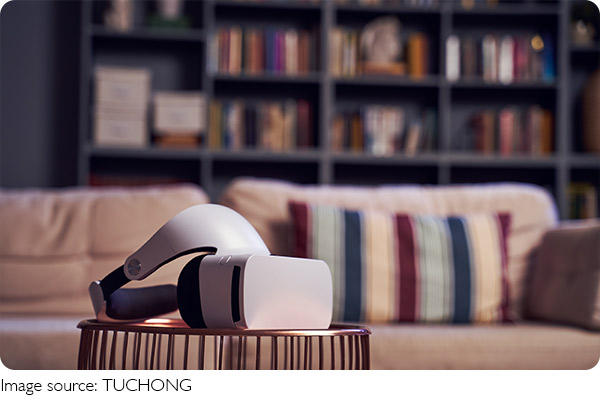
VR does not replace reality—it adds another layer to how reality can be experienced. It expands perception into spaces that are not physically accessible but can still feel real through interaction and presence.
As VR technology continues to evolve, it is reshaping human perception, interaction, and emotional engagement. By bridging the gap between observation and participation, VR is not just a tool—it is a new dimension of experience that invites us to step inside worlds once confined to imagination.