Bloom Last Longer

Liam Reilly
| 01-04-2026
 · Art Team
There’s nothing like a carefully arranged bouquet to brighten up our home and lift our spirits. Yet, the fleeting beauty of flowers often leaves us wishing they could last longer.
Fortunately, with a few scientific care techniques, we can extend the life of everyday floral arrangements to 10–15 days. Let’s dive into the key methods professional florists use to keep blooms vibrant, focusing on water management, stem handling, and environmental control.
Selecting Flowers and Initial Prep
The first step to longer-lasting flowers is choosing the right blooms. We should pick flowers with half-open buds and bright, healthy leaves. When gently pressed, the flower heads should feel firm, not mushy. Avoid flowers with transparent petals or sticky, slimy stems, as these indicate poor quality.
Once we bring flowers home, immediate care is essential. Remove any packaging, then trim the stems at a 45° angle by 2–3 cm. For thick stems, a cross-cut method works best. Immerse the stems in water deep enough to cover about two-thirds of the stem for roughly four hours. Remove any leaves that would sit under water to prevent decay and bacterial growth. This “golden 30-minute method” kickstarts hydration and gives flowers a strong start.
Water Management: Three Golden Rules
Water is life for our blooms, so choosing the right water and managing it properly is crucial. Filtered water or tap water that has sat for 24 hours is ideal, as fresh tap water may contain chlorine. During hot months, adding ice cubes helps maintain a temperature of 18–22°C.
Next, regular water changes are key. Ideally, we change water every 2–3 days, or every 1.5 days in summer. Keeping one-third of the old water and mixing it with fresh water prevents shock from sudden changes.
We can also make simple homemade flower preservatives. The basic version is 500 ml of water with one teaspoon of sugar and five drops of disinfectant. For an advanced mix, a 1:3 ratio of soda (like Sprite) to water works well, providing sugar and antibacterial properties. In emergencies, crushed aspirin can be added—about 1/4 tablet per liter of water—to boost preservation.
Environmental Control: Three Key No-Nos
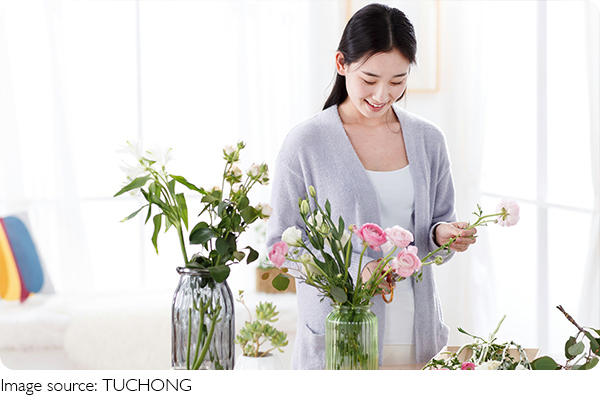
Temperature and light are just as important as water. We aim for a stable 18–25°C environment. At night, moving flowers to an air-conditioned room is fine as long as it doesn’t drop below 15°C. Avoid placing arrangements near heaters, ovens, or any hot surfaces, and keep temperature swings under 5°C.
Light should be indirect or diffused. Direct sunlight can burn petals, while shade-loving flowers like tulips should only get up to two hours of light per day.
Certain areas are off-limits. We keep flowers away from ripening fruits, as ethylene accelerates aging. Avoid vents or drafts that speed water evaporation, and stay clear of electronics like TV tops that radiate heat and dehydrate stems.
Choosing the Right Vase
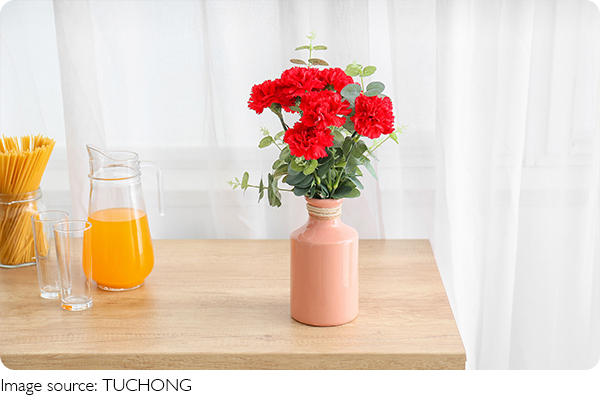
Vase material affects longevity. Glass and ceramic are best, followed by metal. Plastic is last, as it can foster bacteria. The vase opening should be about two-thirds the width of the bouquet, allowing proper airflow.
Disinfection is crucial. Every time we change the water, we scrub the vase walls with a toothbrush and baking soda. Once a month, a thorough rinse with boiling water kills lingering germs. For delicate flowers like roses, we should rinse stem residues daily to prevent sliminess.
Advanced Preservation Techniques
Stem activation can make a big difference. Thick stems like hydrangeas and roses benefit from a quick flame pass for about 10 seconds after trimming. Succulent stems, such as sunflowers or gerberas, can be dipped in boiling water for 20 seconds and then cooled in cold water.
If flowers begin to wilt, a revival is possible. We trim 5 cm off any damaged stems, soak the bouquet in 40°C warm water for two hours, and cover it in a bag for 12 hours to restore moisture. This simple rescue can bring drooping flowers back to life.
Final Thoughts
By carefully managing water quality, creating a stable environment, and trimming stems scientifically, we can easily double or even triple the life of our home bouquets. Observing water levels daily and promptly removing fading flowers ensures each arrangement remains fresh and lively. With these care secrets, we can witness the full, poetic beauty of flowers in our homes and truly enjoy the magic of long-lasting blooms.