Rocket Facts That Amaze

Amit Sharma
| 05-02-2026
 · Information Team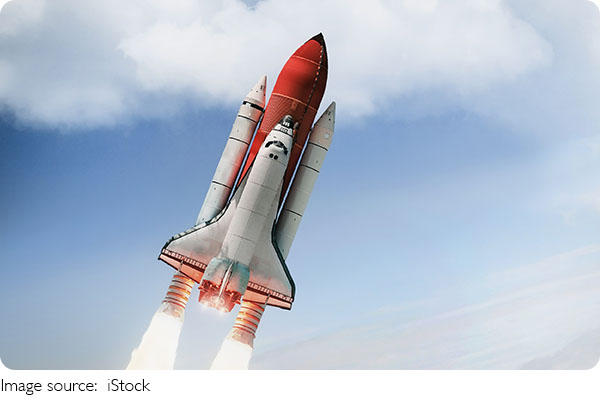
Watching a rocket lift off is a breathtaking sight. The roar, the speed, and the sheer power seem almost unreal.
Yet behind the spectacle are fascinating details and clever engineering that make rockets one of humanity's most impressive achievements.
From extreme speeds to ingenious design, the world of rockets is packed with surprises.
The Incredible Speeds Rockets Reach
Rockets are among the fastest human-made machines, designed to overcome Earth's gravity. To escape Earth's atmosphere, a rocket must reach speeds exceeding 28,000 kilometers per hour. That's fast enough to circle the planet in under 90 minutes.
Practical examples:
1. The Space Shuttle's launch speed was roughly 28,000 km/h to reach orbit.
2. Modern rockets like Falcon 9 accelerate rapidly, reaching supersonic speeds in just a few minutes.
3. Amateur model rockets, while much smaller, can reach hundreds of kilometers per hour, offering a scaled-down glimpse of these incredible velocities.
For instance, students building model rockets for competitions learn how design, weight, and fuel type influence maximum speed, giving them hands-on insight into real rocket physics.
Multi-Stage Design
Most rockets use multiple stages to reach orbit. Each stage contains its own engines and fuel, detaching once spent to reduce weight. This clever design allows rockets to efficiently reach higher altitudes without carrying unnecessary mass.
Practical examples:
1. Falcon Heavy has three stages, each contributing to its payload's journey.
2. The Saturn V rocket, used in the Apollo missions, had three stages to send astronauts to the Moon.
3. Even small-scale educational rockets use two stages to teach students about efficiency and staging.
Understanding staging helps explain why rockets look massive at launch but quickly shed parts as they ascend, making the remaining sections lighter and faster.
Rockets Can Travel Beyond Earth
Rockets aren't limited to orbiting our planet—they can carry probes, satellites, and humans to the Moon, Mars, and beyond. Interplanetary travel requires precise calculations to account for gravity, fuel, and trajectory.
Practical examples:
1. Mars rovers, like Perseverance, traveled millions of kilometers thanks to rocket launches designed to escape Earth's pull.
2. Satellites in geostationary orbit rely on rockets to reach their precise orbital position.
3. SpaceX missions test technologies that may one day allow humans to travel to Mars using rockets capable of deep-space journeys.
For enthusiasts, tracking these missions online shows how rockets can move from Earth to entirely different planets, highlighting the engineering mastery behind each launch.
The Power of Rocket Engines
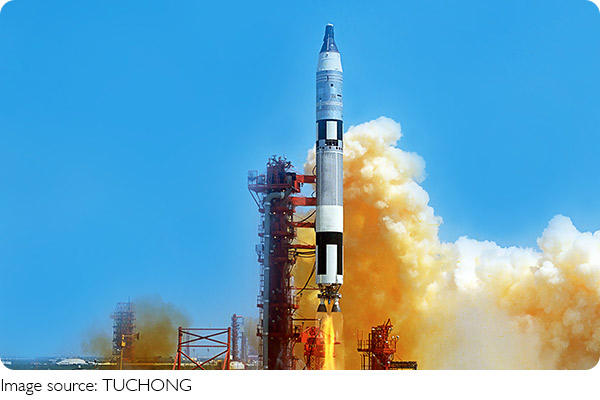
Rocket engines generate immense force using controlled explosions of fuel. Unlike airplanes, rockets don't rely on air—they carry oxidizers, allowing them to operate in the vacuum of space. Some engines produce millions of pounds of force at liftoff.
Practical examples:
1. The Space Shuttle's main engines produced over 1.2 million pounds of force.
2. Liquid-fueled rockets provide adjustable force, while solid-fueled rockets offer simpler, high-energy launches.
3. Hobbyists experimenting with safe model rocket engines learn how combustion and fuel type impact flight distance and height.
Engine technology shows the precision and power needed to overcome gravity, making even small rockets an impressive feat of chemistry and engineering.
Rockets in Everyday Life
Rockets aren't just for space exploration—they're part of daily life too. Satellites launched by rockets power GPS systems, weather forecasting, and communications around the world.
Practical examples:
1. Weather satellites help meteorologists predict storms, keeping communities safe.
2. Communication satellites support internet connections in remote areas.
3. Observing model rockets in schools inspires students to pursue careers in science, technology, and engineering.
Even if you don't become an astronaut, rockets influence your life through technology, connectivity, and scientific advancement.
Rockets are more than fiery blasts into the sky—they're marvels of speed, design, and physics. From breaking speed barriers to powering satellites that touch every part of our daily lives, rockets combine ingenuity and raw power. Next time you see a launch, remember: each roar and streak of light represents centuries of human curiosity, precise calculations, and the relentless pursuit of exploring the unknown.